A waterlogged lawn, muddy patches or standing water after heavy rainfall can make your garden difficult to use. While occasional puddles are normal, persistent waterlogging often indicates underlying garden drainage problems that need attention.
The right solution depends on what’s causing the water to collect. Compacted soil may benefit from aeration, while poor ground levels, clay-heavy soil or excessive surface runoff could require professional drainage work.
Understanding the cause before choosing a solution can help prevent unnecessary expense and recurring problems.
A typical renovation involves planning, surveying, design, site preparation, groundworks, construction and finishing. The exact stages depend on your garden’s condition and the improvements you want to make.
This guide explains each stage, how long landscaping projects generally take and what you can do to keep everything running smoothly.
What Is the Best Way to Fix Poor Garden Drainage?
The best way to improve garden drainage is to identify where the excess water comes from and why it isn’t draining away.
Common solutions include:
- Soil aeration: Relieves compaction and helps water penetrate the ground.
- Soil improvement: Adding organic matter can improve soil structure over time.
- French drains: Collect and redirect excess water through gravel-filled trenches and drainage pipes.
- Soakaways: Allow collected water to disperse into suitable, permeable ground.
- Garden regrading: Adjusts ground levels to encourage water to flow away from problem areas.
- Sump pumps: Remove collected water where gravity drainage isn’t practical.
Not every garden needs an underground drainage system. Minor waterlogging may improve through better soil management, while persistent flooding usually requires a more detailed assessment.
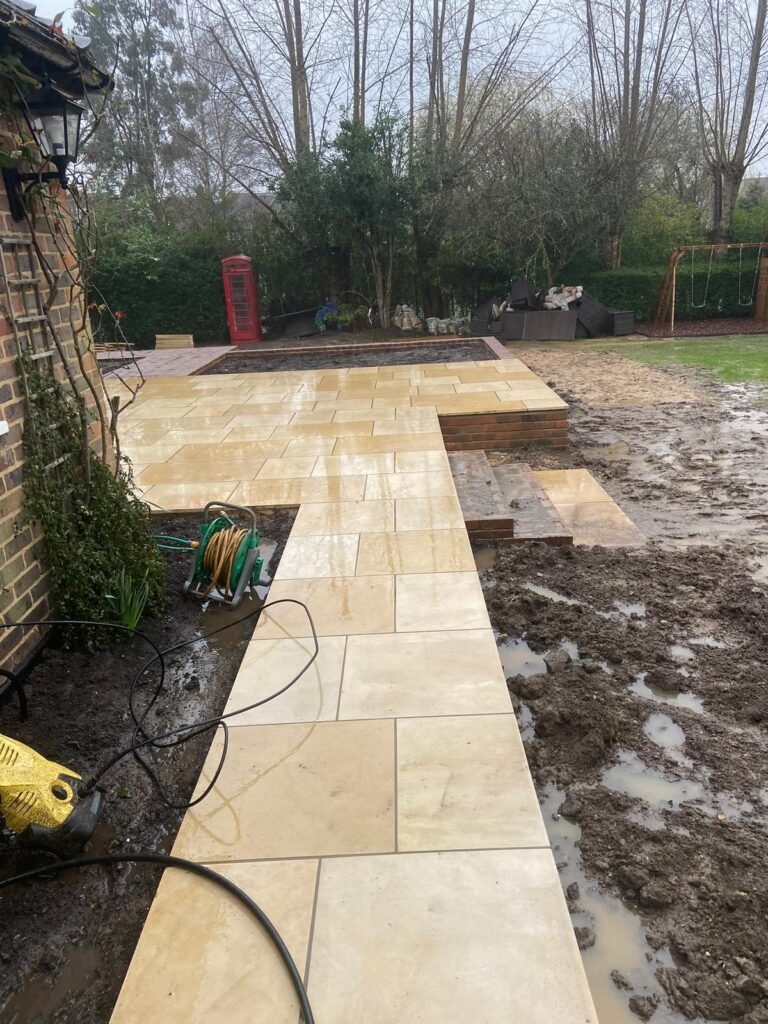
What Causes Garden Drainage Problems?
Several factors can contribute to poor drainage, and some gardens experience more than one problem.
Heavy Clay Soil
Clay-rich soil contains fine particles that can restrict water movement, particularly when compacted or saturated.
This is a common consideration in parts of Walthamstow and East London, where heavy soil can leave lawns muddy long after rainfall.
Compacted Ground
Regular foot traffic, construction work and heavy machinery can compress soil, reducing the spaces through which water and air normally move.
Compaction is particularly noticeable in heavily used lawns.
This is a common consideration in parts of Walthamstow and East London, where heavy soil can leave lawns muddy long after rainfall.
Incorrect Garden Levels
Low areas naturally collect runoff. If patios, paths or lawns slope towards a property rather than a suitable drainage point, water can accumulate in unwanted places.
Excessive Surface Water
Large paved areas, neighbouring runoff and blocked drainage channels can overwhelm a garden’s ability to absorb or redirect rainfall.
How Can You Identify the Cause of Poor Drainage?
Before carrying out repairs, observe what happens during and after rainfall.
| What You Notice | Possible Cause | Potential Solution |
|---|---|---|
| Lawn stays muddy for days | Compaction or slow-draining soil | Aeration and soil improvement |
| Water collects in one corner | Low ground levels | Regrading or targeted drainage |
| Puddles appear beside paving | Incorrect falls or blocked channels | Drainage inspection and adjustments |
| Water runs downhill into the garden | Surface runoff | Interception drainage with suitable discharge |
| Persistent flooding after rainfall | Multiple drainage or ground-level issues | Professional drainage assessment |
These symptoms provide useful clues, but they do not confirm the cause. Persistent problems may require further investigation.
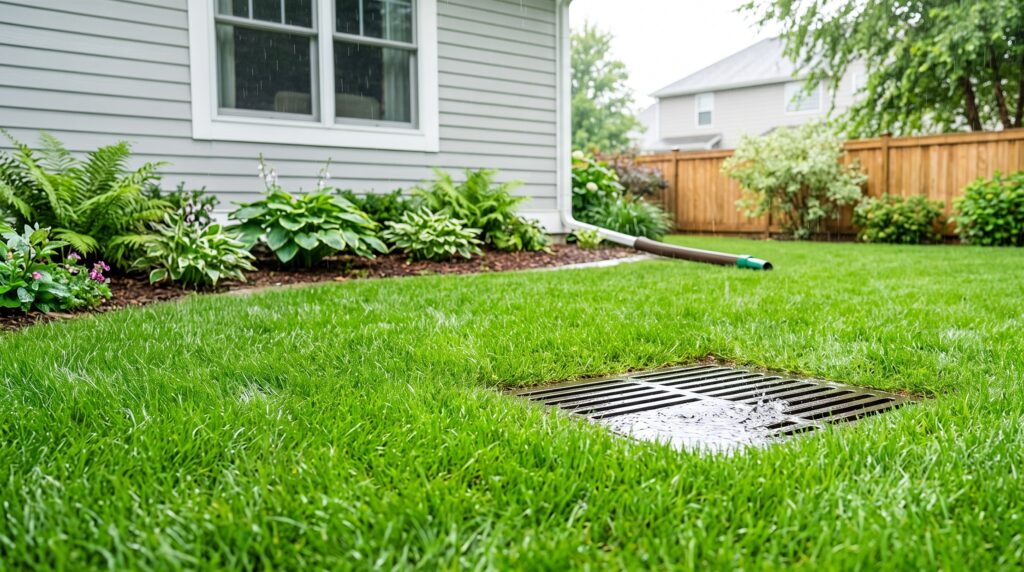
How to Fix a Waterlogged Garden
Some garden drainage improvements are relatively straightforward, particularly when waterlogging is limited to the lawn or planting areas.
Aerate Compacted Soil
Aeration creates openings that allow water and air to penetrate compacted ground.
For lawns, hollow-tine aeration removes small plugs of soil and can help improve drainage over time.
Avoid working on heavily saturated ground, as this can cause additional damage.
Improve Soil Structure
Adding suitable organic matter to planting beds can gradually improve soil structure and support healthier root development.
However, mixing small amounts of sand into heavy clay is not a reliable drainage solution and may make soil conditions worse.
Clear Existing Drainage Channels
Check that surface drains, gullies and drainage channels are free from leaves, soil and other debris.
A blocked channel can cause water to accumulate even when the wider drainage system is functioning correctly.
If waterlogging continues despite these improvements, the problem may require a more substantial solution.
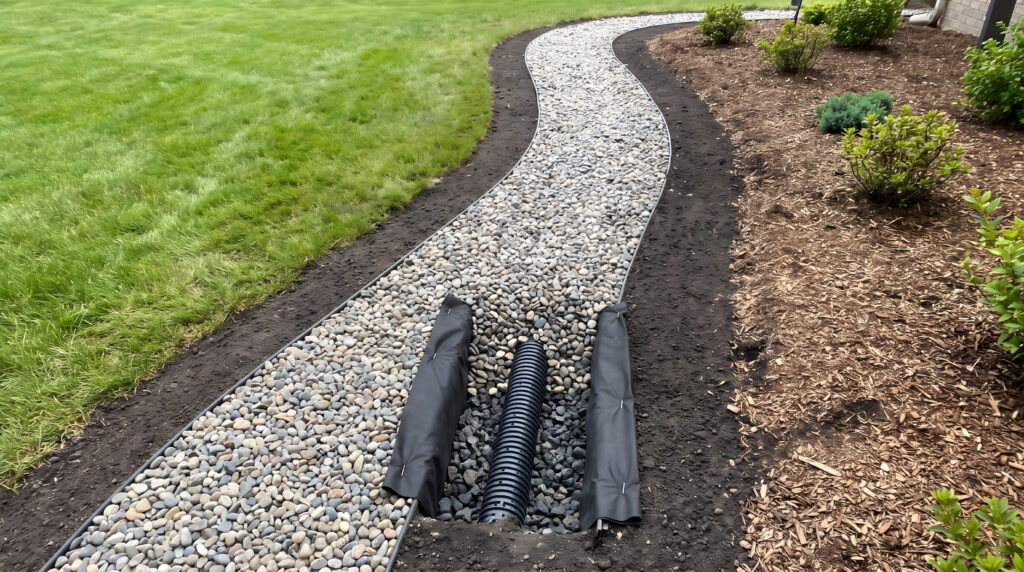
When Should You Install a French Drain?
A French drain is a gravel-filled trench, often containing a perforated pipe, designed to collect water and direct it towards a suitable outlet.
French drains can be useful for:
- Persistent wet patches across lawns
- Water collecting near paved areas
- Surface water moving across sloping gardens
- Managing water behind retaining walls
However, a French drain does not make water disappear. It must discharge somewhere appropriate.
Without a suitable outlet and correct installation levels, the system may simply move the drainage problem elsewhere.
For persistent flooding, our professional garden drainage solutions include assessing ground conditions and identifying suitable water management options.
Will a Soakaway Fix Garden Flooding?
A soakaway collects surface water and allows it to gradually infiltrate the surrounding ground.
It can be effective where soil permeability, available space and site conditions are suitable.
However, soakaways are not appropriate for every garden.
In heavy clay soils, water may disperse too slowly for the system to function effectively. Proper infiltration testing is therefore important before installation.
The location of a soakaway also needs careful consideration, particularly near buildings, boundaries and underground services.
Can Changing Garden Levels Improve Drainage?
Sometimes the problem isn’t the soil itself but the direction water travels.
Garden regrading involves adjusting ground levels to encourage surface water to move towards an appropriate drainage area.
This may be necessary when water collects against retaining walls, pools beside patios or settles in low sections of the lawn.
For gardens sitting below surrounding properties, pumped drainage may sometimes be considered where gravity drainage is impractical.
Significant level changes and underground drainage work should be professionally assessed to avoid transferring water onto neighbouring land.
How Can You Prevent Garden Drainage Problems?
Good drainage management can reduce the likelihood of recurring waterlogging.
Practical steps include:
- Avoiding unnecessary foot traffic on saturated lawns
- Aerating compacted soil when conditions are suitable
- Maintaining surface drains and channels
- Keeping soil and debris away from drainage outlets
- Ensuring new paving incorporates appropriate drainage
- Addressing persistent standing water before further landscaping
When planning a larger garden landscaping project, drainage should be considered alongside paving, planting and structural features rather than treated as an afterthought.
When Should You Call a Professional About Garden Drainage?
Professional advice is particularly useful when waterlogging persists, flooding affects several areas or water collects close to buildings.
A landscaper can assess ground levels, soil conditions, existing drainage and the likely source of excess water.
With hands-on landscaping experience dating back to 1997, we understand why proper groundwork and drainage planning matter, especially when preparing gardens for long-term use.
Frequently Asked Questions About Garden Drainage
What Is the Best Way to Fix a Waterlogged Garden?
Start by identifying the cause. Aeration and soil improvements may resolve minor waterlogging, while persistent flooding could require French drains, regrading or another professionally designed system.
How Do You Improve Drainage in Heavy Clay Soil?
Improve soil structure with organic matter, reduce compaction and avoid working the ground when saturated. Severe drainage problems may need an engineered solution following a site assessment.
Will a French Drain Stop My Garden Flooding?
A correctly designed French drain can help collect and redirect water, but its effectiveness depends on the cause of flooding, ground conditions and having a suitable discharge point.
Can You Install a Soakaway in Clay Soil?
Only where infiltration testing demonstrates that the ground can absorb water adequately. Heavy clay often limits soakaway performance, so alternative drainage arrangements may be necessary.
Do Garden Drainage Problems Get Worse in Winter?
They can. Prolonged rainfall, saturated ground and reduced evaporation may make existing drainage weaknesses more noticeable during autumn and winter.
Get Your Garden Drainage Back Under Control
Garden drainage problems are easier to address when the underlying cause is understood. Whether the issue involves compacted soil, unsuitable levels or persistent flooding, choosing the right solution helps protect your garden and future landscaping improvements.
If standing water continues to affect your outdoor space, contact LS Garden Design & Build to discuss your drainage concerns and arrange a site assessment.